

Symphony orchestra summer course for young musicians – Summer 2026
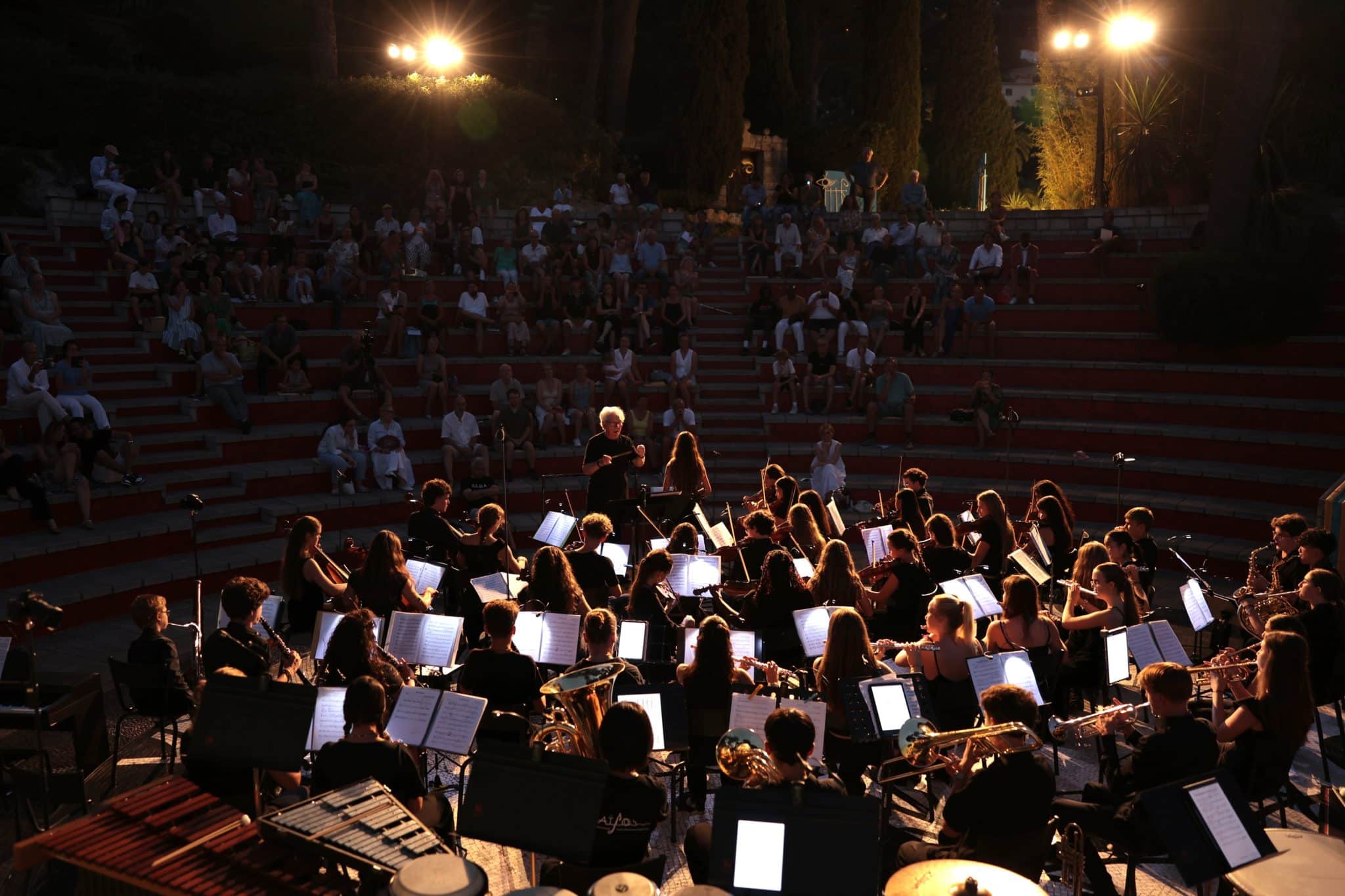
Every summer, AIJOS brings together young musicians aged 12 to 17 from around the world for 10 intensive days of symphony orchestra in Cap d’Ail, between Nice and Monaco. From August 2 to 11, 2026, all instruments — strings, woodwinds, brass and percussion — work in sectionals in the morning and come together in tutti rehearsals in the afternoon, culminating in two public concerts, one of which takes place at Monaco’s Fort Antoine.
The course concept
Under the direction of Jean-Jo Roux (conductor, agrégé in music, Chevalier des Arts et Lettres) and Emmanuel André (violinist), co-organisers of more than 25 youth symphony orchestra courses.
The principle: a 10-day music course to build a symphony orchestra from A to Z. Participants work in sectionals in the morning with a dedicated teacher for each instrument group, then come together for tutti rehearsals every afternoon at the Jean Cocteau theatre to rehearse the pieces selected for the course. The whole experience concludes with two public concerts, one of which takes place at Monaco’s Fort Antoine.
The course takes place at the Centre Méditerranéen de Cap d’Ail, between Nice and Monaco, in a 3-hectare park with an open-air amphitheatre decorated by Jean Cocteau and overlooking the Mediterranean. The beach is a five-minute walk away.
The campus is closed and monitored at night by a private security company. Participants are supervised by the teaching musicians, a stage manager and qualified activity leaders, as part of a stay declared as a collective accommodation for minors (ACM) with the SDJES of the Alpes-Maritimes.
Who is this course for?
The course is open to all young musicians aged 12 to 17, regardless of their country of origin. Required level: second-cycle conservatoire or at least 6 years of instrumental practice and some orchestral experience.
All instruments of the symphony orchestra are represented:
- Strings: violin, viola, cello, double bass
- Woodwinds: flute, oboe, clarinet, bassoon
- Brass: trumpet, French horn, trombone, tuba
- Percussion
Applications are reviewed by the musical direction before confirmation. This is not an entrance audition — it’s a conversation about the young musician’s background and journey.
Individual lesson options
In addition to orchestral work, individual lessons allow participants to deepen their practice:
- Violin, cello, flute or tuba course: 4 individual 45-min lessons + sectional and tutti rehearsals — €160
- Introduction to conducting: 1 lesson per day, conducting a piece in concert — €200 (only 2 places)
Goals of the course
- Explore the symphonic repertoire and interpretation across different periods and styles
- Practice collective listening and ensemble playing
- Play with young musicians from around the world in a friendly atmosphere
- Prepare and deliver 2 end-of-course concerts in public
Lessons are taught by professionals from orchestras and conservatoires, recruited by the AIJOS association.
Symphonic programme
From Vivaldi to film music and jazz: the repertoire is chosen to inspire the desire to play. These are works that have thrilled generations of participants, and suggestions from future students are warmly welcomed.
The final programme is adapted each year by Emmanuel André and Jean-Jo Roux based on the orchestra’s lineup and the profile of the registered musicians.
Two concerts to wrap things up
The course concludes with two public performances: the first at the Jean Cocteau amphitheatre of the CMEF, in the open air facing the sea. The second at the Fort Antoine theatre, in the old town of Monaco.
A typical day
- 9:00 am – 12:30 pm: sectional or tutti rehearsals (with breaks)
- 1:30 pm – 4:30 pm: free time at the Centre (games, ping-pong) or outings nearby in small groups (with parental authorisation). Supervised outings available with the CMEF activity team
- 5:00 pm – 7:00 pm: sectional or tutti rehearsals
- Evenings: international activities with other young people on the campus, or rehearsal/concert
- Bedtimes and wake-ups under the supervision of the activity team
Musical team 2026
* Subject to availability
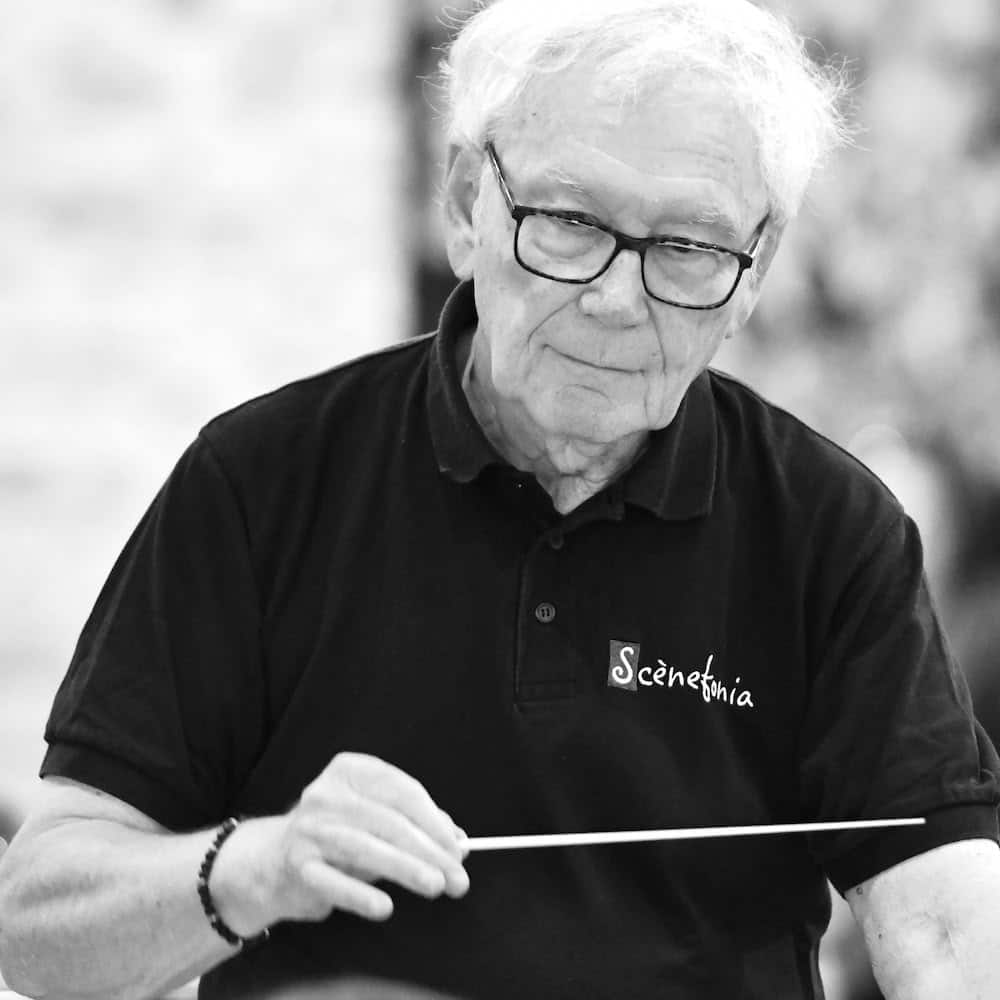
Chef d’orchestre et compositeur
Il a créé l’orchestre symphonique du lycée David d’Angers en 1983 (65 jeunes âgés de 11 à 18 ans). Cet orchestre s’est produit à Houston, New York, Boston, Dallas, New Orleans, Vienne, Copenhague, Prague, Montréal, Berlin, Cracovie, Shanghai, Pékin et Bamako, Budapest… Après deux tournées en Chine (1998 et 2004), JJ Roux a été invité à diriger un orchestre de jeunes chinois et donner deux concerts en août 2006 à Suzhou près de Shanghai.
Il est directeur musical de Scènefonia, orchestre symphonique d’Angers.
Parmi ses dernières créations:
- THÂ SKÉMYA, pour choeur et orchestre
- LES AMANTS DE GALERNE, opéra (2016)
- CANTIQUE DES CANTIQUES, oratorio créé en juin 2023 au grand théâtre d’Angers.
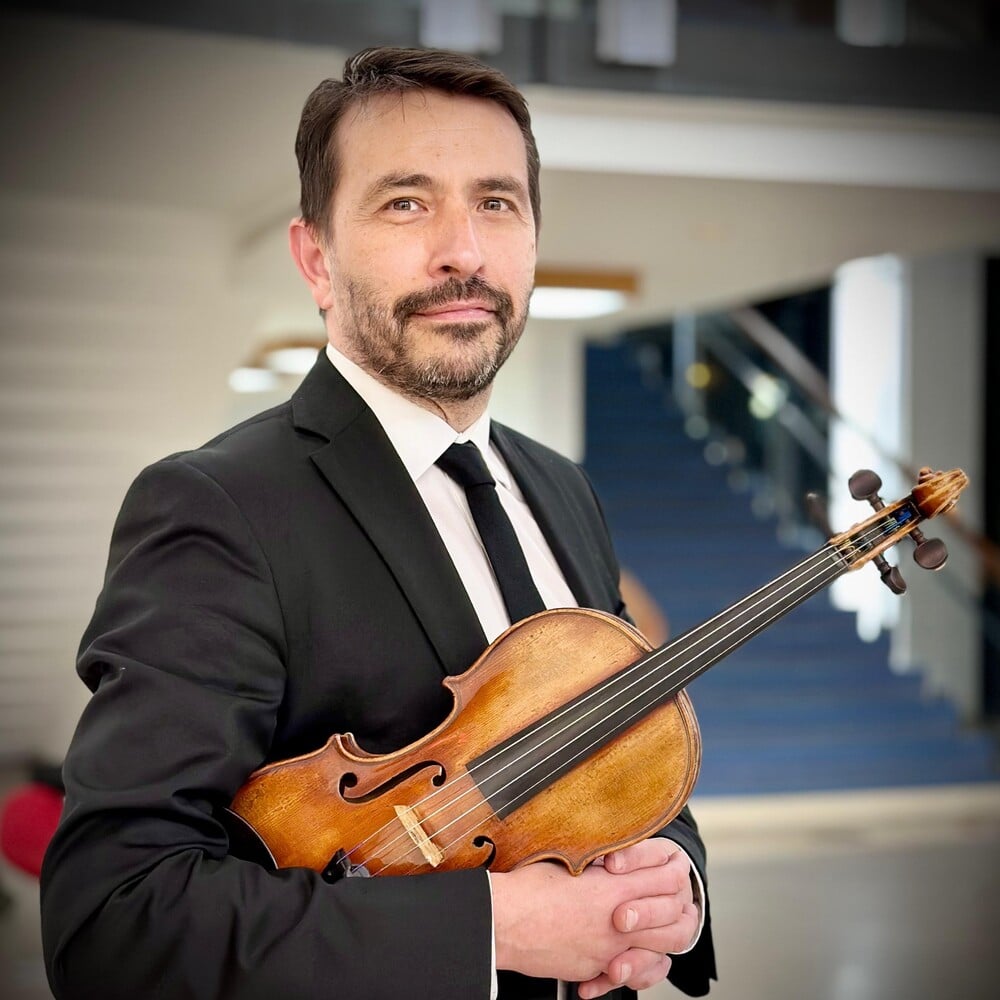
Violoniste
Après ses études musicales au Conservatoire National de Région d’Angers, puis de St Maur (médailles d’or à l’unanimité), Emmanuel André suit les classes d’érudition au Conservatoire National Supérieur de Musique de Paris. Il obtient ensuite son Premier Prix de violon à l’unanimité du CNSM de Lyon et devient membre de l’Orchestre Philharmonique de Radio-France en 1994.
Il a participé aux master classes de J.-J. Kantorow, du Quatuor Ravel et, plus récemment, a travaillé avec P. Oundjan, membre du Quatuor de Tokyo.
Emmanuel André a par ailleurs le souci de transmettre son expérience aux plus jeunes : c’est ainsi qu’il intervient régulièrement dans les activités « Jeunes Public » de l’Orchestre Philharmonique, et anime depuis 25 ans un stage d’orchestre pour les jeunes.
Il enseigne le violon au conservatoire d’Asnières-sur-Seine, près de Paris.
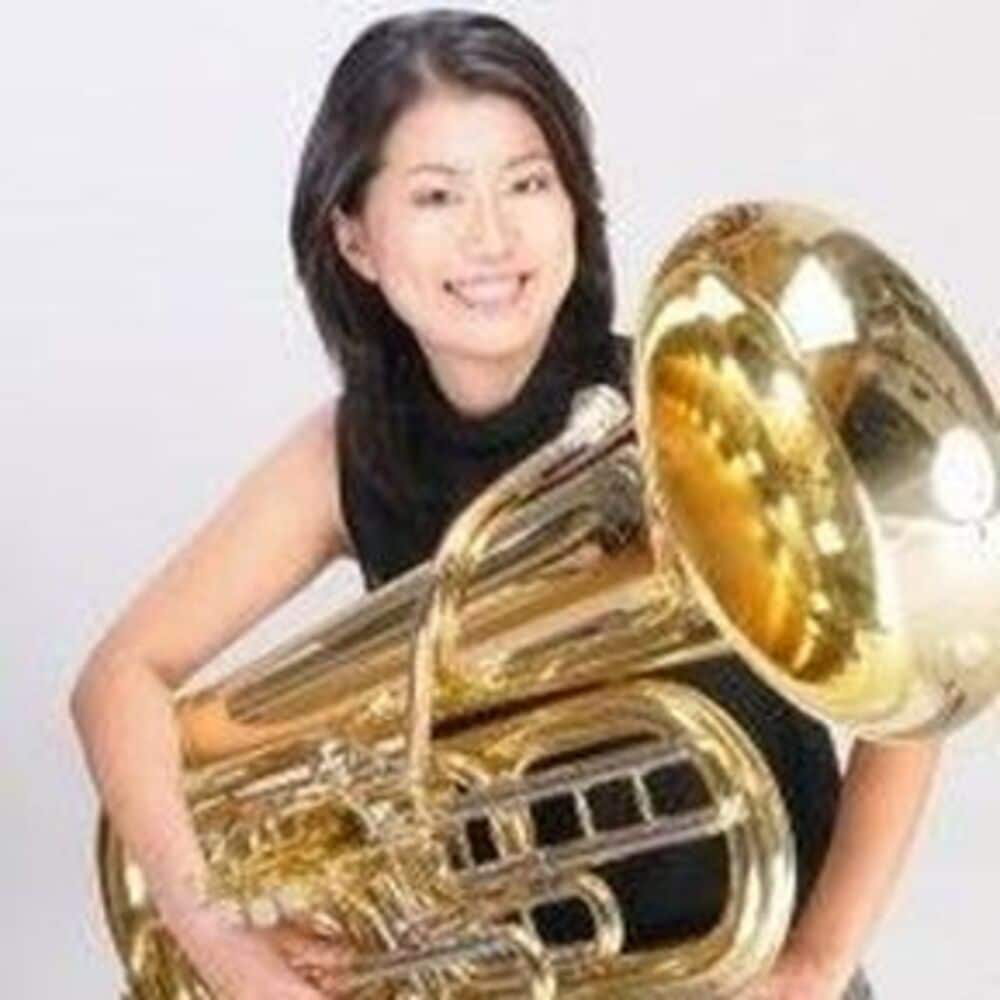
Tuba
Professeure de cuivre
Originaire de Tokyo (Japon), Harumi Baba-Dath obtient en 2002 le diplôme de Tuba à l’université de musique de SHOWA au Japon dans la classe de Kensuke Yao, ainsi que le DNESM dans la classe de Melvin Culbertson et d’Arnaud Boukhitine au Conservatoire National Supérieur de Musique de Lyon.
Elle remporte plusieurs prix internationaux, notamment le 1er prix du Concours de Tuba Harvey G. Philips au Japon.
Harumi joue occasionnellement dans les Orchestre National du Capitole de Toulouse, de Montpellier, de Bordeaux Aquitaine, de Lorraine, et participe à plusieurs projets de musique contemporaine et d’improvisation.
Suite à la rencontre avec Michel Godard, elle a commencé à jouer du Serpent, dans la classe de Volny Hostiou, de Jean-Pierre Canihac et joue dans différents ensembles de musique ancienne : orchestre baroque et musique de chambre.
Elle est actuellement professeur de Tuba et Serpent au CRR de Perpignan et au CRR de Montpellier.
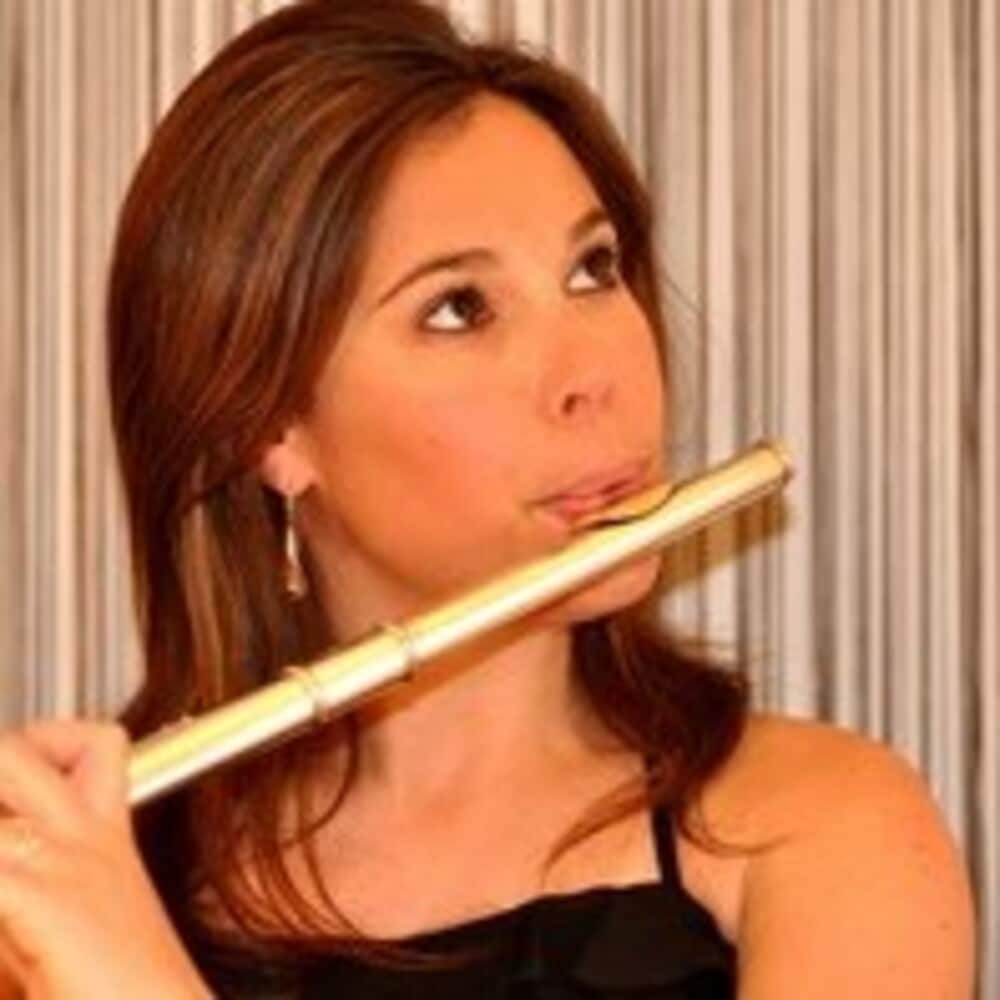
Flûtiste
Professeur des Bois
Formation
- 2015 : DEM Traverso à l’unanimité, CRR Aix en Provence
- 2012 : Diplôme d’État de professeur de flûte-traversière, CESMD Poitou-Charentes
Expérience Pédagogique
12 ans de Professorat
- 2015-2019: Projet d’orchestre à l’école “DEMOS”, Marseille
- 2014-2019: Conservatoire à Rayonnement Intercommunal, Saint Maximin la ste Baume
- Ecole Municipale de Musique, Bandol
- 2014-2015: Conservatoire National à Rayonnement Régional, Toulon, flûte-trav et formation musicale.
Expérience Artistique
- 2016-2019: Création de l’ensemble baroque “Horae” ( soprano, traverso, viole de gambe, clavecin)
- Création du duo “Odyssée” ( flûte et guitare)
- 2015-2019: Orchestre de l’Opéra de Toulon, Orchestre Philharmonique Provence Méditerranée, Orchestre Régional de Cannes, Piccolo solo de la Musique des Équipages de la Flotte de Brest, Ensemble de flûtes baroques et modernes « Azulejo » .
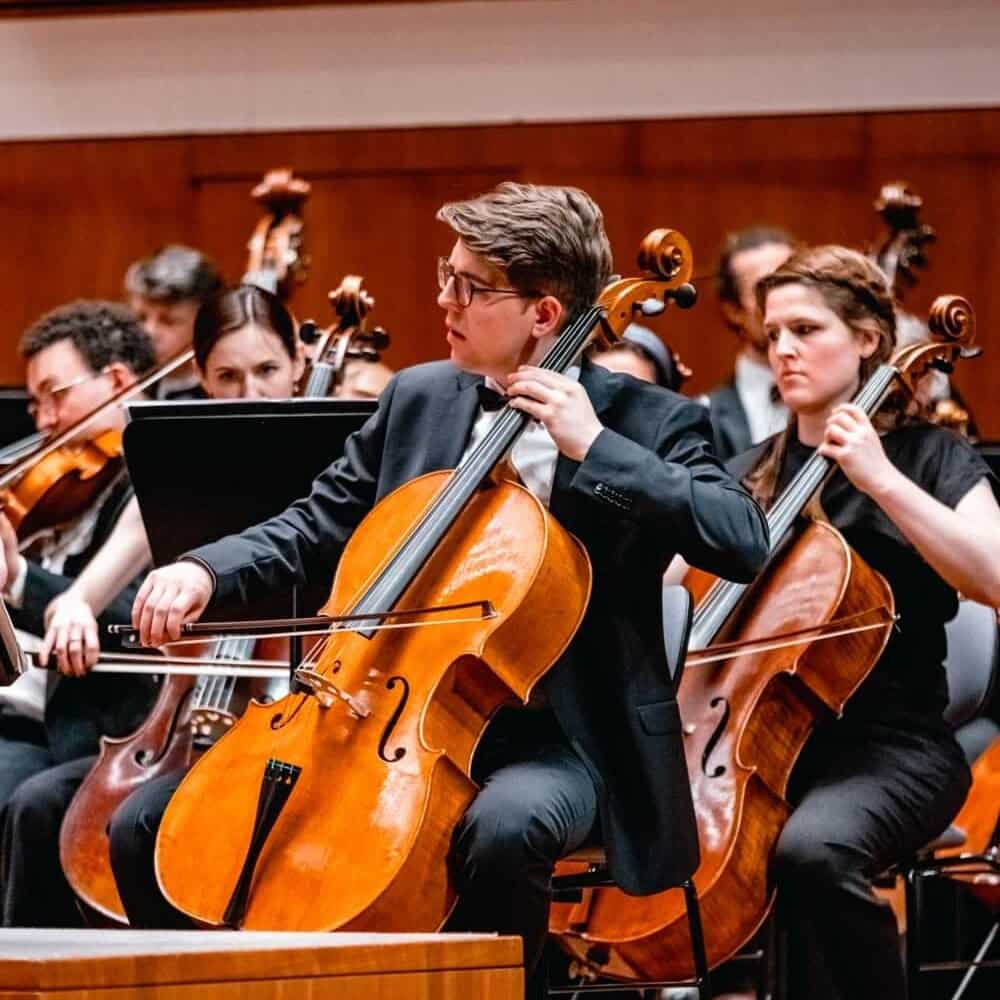
Violoncelle et contrebasse
Il commence le violoncelle à l’âge de 7 ans au Conservatoire de Freiburg im Breisgau avec Philipp Schiemenz.
Il a fait une formation de musique baroque en collaboration avec le freiburger barockorchester et a également profité de plusieurs projets avec le SWR Symphonieorchester.
En 2020, il intègre l’Orchestre des lycées français du monde en tant que violoncelle solo, un projet grâce auquel il a pu travailler avec des musiciens de l’Orchestre philharmonique de Radio France, notamment Jean-Claude Auclin et Emmanuel André. Suite à ce projet, il est invité à jouer avec l’orchestre OJEM de Madrid.
En 2022, il intègre l’orchestre ORSO Freiburg/Berlin avec lequel il se produit régulièrement dans des salles de concert prestigieuses comme la Konzerthaus Freiburg, la Liederhalle Stuttgart et la Philharmonie de Berlin. Il est nommé violoncello solo en 2023.
En 2023, il est nommé tuteur de l’Orchestre des lycées français du monde. Il est également élève de direction d’orchestre d’Ektoras Tartanis, premier, Kapellmeister’ à l’opéra de Freiburg, et travaille en tant qu’assistant musical et responsable général pour l’ensemble Holst Sinfonietta et l’Opera Factory Freiburg.
En 2024, il a dirigé une représentation de l’opéra « The Rape of Lucretia » de Benjamin Britten et s’est produit entre autres au Palais des Beaux-Arts Bruxelles et au Kurhaus Baden-Baden.
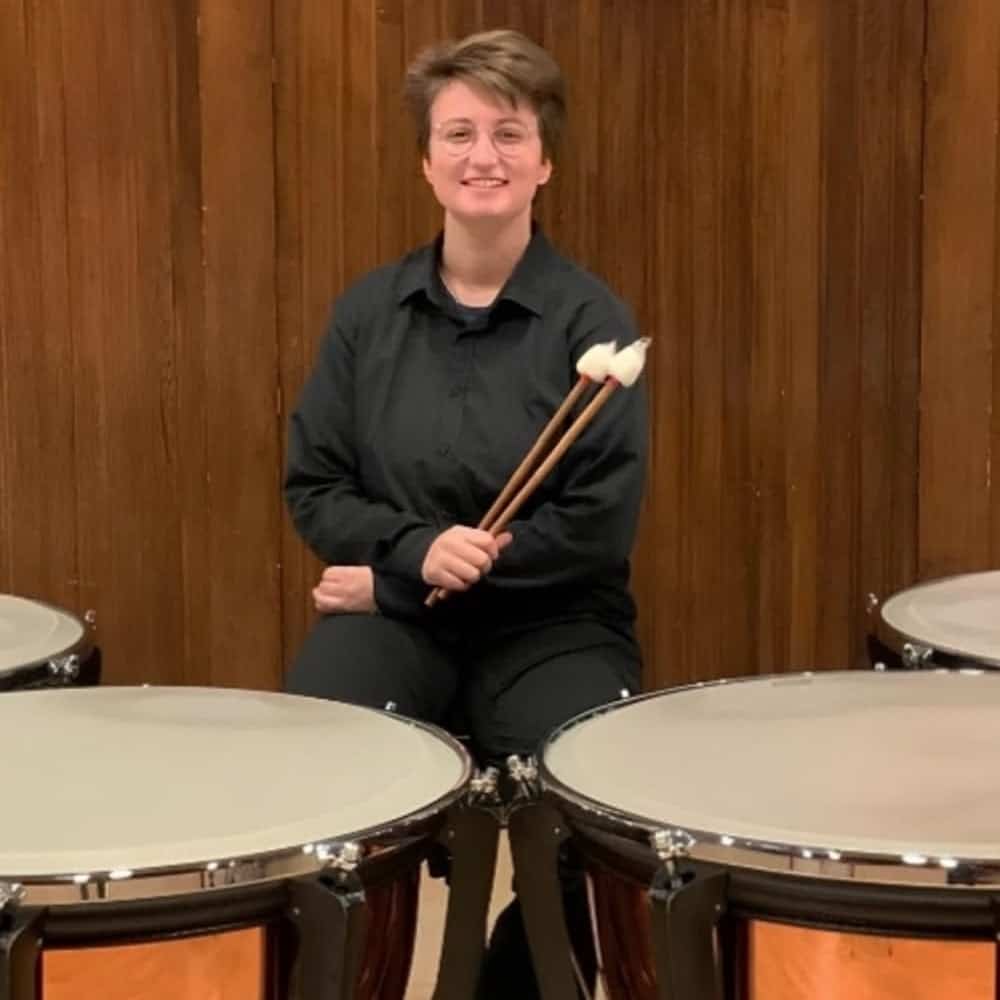
Régisseuse
Elle commence la batterie à l’âge de 6 ans à St Dizier et découvre les percussions avec Thierry Collin.
Puis entre dans la classe de Thierry Bonneau.
En été 2019 elle fait son premier séjour musical AIJOS en tant que stagiaire.
Après avoir obtenu le BAC en 2021, elle entre au CRR de Reims et obtient son DEM en deux ans.
En 2023, elle est admise au CRR de Boulogne-Billancourt dans la classe de Christophe Bredeloup.
Elle est remplaçante au Paris Brass Band pour les championnats de France en 2023 et est sélectionnée pour le Brass européen pour représenter la France aux championnats d’Europe en mai 2025 en Norvège.
En 2025, elle effectue son premier stage AIJOS en tant que professeure de percussions et régisseure de l’orchestre de l’académie.
What families say
Practical info and rates
Course dates 2026
Arrival: Sunday 02/08/26 before 5:00 pm
Departure: Tuesday 11/08/26 after breakfast
Boarding
(full board)
Accommodation + meals + transfers + supervision
Day attendance
(limited places)
Course (€280) + registration (€100) + meals (€120)
Additional options
Individual instrument lessons: €160
Conducting course: €200
Options paid on arrival to AIJOS
Registration process
- Application reviewed by the musical direction
- Registration link + €280 deposit
- Balance of €490 to be paid no later than 1 month before the course
Apply now
Frequently asked questions
What instrumental level is required?
The course is open to young people aged 12 to 17 with at least 6 years of instrumental practice or a second-cycle conservatoire level. Some orchestral experience is a plus. Applications are reviewed by the musical direction before registration is confirmed.
Which instruments are accepted?
All instruments of the symphony orchestra: strings (violin, viola, cello, double bass), woodwinds (flute, oboe, clarinet, bassoon), brass (trumpet, French horn, trombone, tuba) and percussion.
How much does the course cost?
Boarding with full board: €770 (accommodation, meals, transfers, supervision). Day attendance: €500 (course, registration, meals). Options: individual instrument lessons €160, conducting course €200. Payment in 2 instalments: 50% on confirmation, balance before 1 July 2026.
What language are rehearsals held in?
In French, with English translations. The campus is naturally multilingual: French, English, Italian and German are all spoken there. Several teachers are themselves international.
What is the work schedule?
Mornings: sectional rehearsals. Early afternoon free (beach, downtime). From 5:00 to 7:00 pm: tutti rehearsals. Evenings hosted by the CMEF with the other young people on the international campus. No exam: the course concludes with two public concerts.
Are individual lessons offered?
Yes, as an option. Violin, cello, flute, bassoon, oboe, French horn, clarinet, brass: 4 lessons of 45 min (€160). Conducting: 1 lesson per day + conducting a piece in concert (€200, 2 places).
Is the campus secure?
The CMEF campus in Cap d’Ail is closed and monitored at night by a private security company. The stay is declared as a collective accommodation for minors (ACM) with the SDJES 06. Participants are supervised by the teaching musicians, a stage manager and qualified activity leaders.
Where are the end-of-course concerts held?
Two concerts: the first at the Jean Cocteau amphitheatre of the CMEF in Cap d’Ail, in the open air facing the sea. The second at the Fort Antoine theatre in Monaco.


